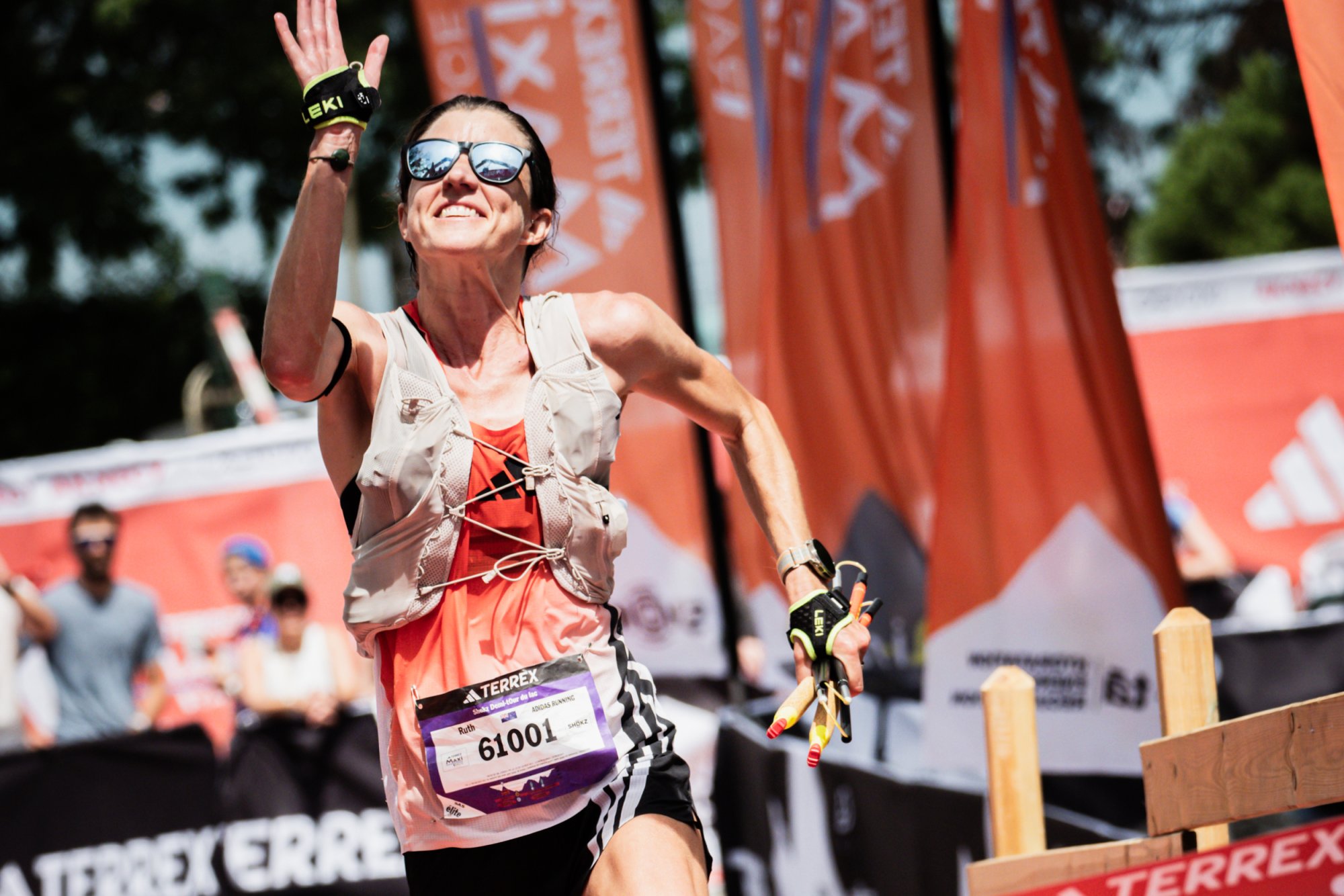
Kraft und mentale Stärke
Ruth Croft gehört seit Jahren zu den besten Trailrunnerinnen der Welt. Im Interview spricht die Amazfit-Athletin über Ultratrail Training, ihre Motivation, den schrittweisen Weg zu langen Distanzen, Krafttraining, Regeneration und den Umgang mit schwierigen Momenten im Rennen.
Du gehörst seit Jahren zu den weltbesten Trailrunnerinnen. Was begeistert dich am Trailrunning und Ultratrail Training noch heute genauso wie bei deinem ersten Rennen?
I’m definitely still really motivated by competition.
I think one of the things that has helped keep me motivated and allowed me to continue improving is that I didn’t move into ultrarunning too early in my career. I’m really grateful that I spent so much time racing sub ultra distances and competing in the Golden Trail World Series.
When I eventually moved into ultras, it almost felt like discovering a whole new sport. Suddenly there was a completely different set of skills to learn. That progression has kept running interesting for me. I still feel like I’m learning, and there are still areas where I can improve. I think that’s a big part of what keeps me motivated.
Viele unserer Leserinnen und Leser sind keine Profis, sondern trainieren neben Beruf und Familie. Worauf sollten sie beim Ultratrail Training achten, wenn nur wenig Zeit zur Verfügung steht?
For someone balancing running with work and family and who has limited time, I think it becomes even more important to be specific with your training. What you prioritise really depends on the race you’re preparing for. Training for Western States is going to look very different from preparing for a mountainous ultra in Europe. You don’t necessarily need to do everything. You need to identify what your particular race demands are and make the training time you do have as specific and purposeful as possible.
Viele Menschen träumen davon, eines Tages einen Ultratrail zu laufen. Wie würdest du empfehlen, sich Schritt für Schritt an eine solche Distanz heranzuarbeiten, ohne es zu übertreiben?
When building towards an ultra, I also think patience is really important. You don’t need to jump straight into a 100 miler. Give yourself time to progress through the distances, learn what works for you and actually enjoy that process along the way.
Welchen Fehler siehst du am häufigsten bei ambitionierten Amateur-Läuferinnen und -Läufern – und was ist dein wichtigster Tipp, um ihn beim Ultratrail Training zu vermeiden?
I think one of the biggest mistakes I see is people getting caught up in gear, trends or the latest equipment before they’ve really nailed the fundamentals.
It’s easy to start looking for those one percent gains, but if your training isn’t consistent, your nutrition isn’t supporting what you’re doing, or you’re not prioritising sleep and recovery, then those smaller things aren’t going to make much difference.
For me, it’s about building a really strong foundation first. Get the basics right and do them consistently. Once those are in place, then you can start worrying about the extra one percent.
Another thing is not to look at any one metric in isolation, but to look at it over time and recognize trends. Data that my Amazfit Cheetah 2 Ultra tracks needs context to tell the full story.
On a day-to-day basis, I’ll look at things like my sleep score, resting heart rate, HRV, and BioCharge. For me, those metrics are particularly useful for identifying trends, if something is shifting over several days, for example, it can sometimes be an early indication that I’m not recovering as well or that I might be coming down with something.
When it comes to training load and the more detailed analysis, that’s where my coach comes in. That’s what he does best. It’s really a combination of being able to take the data, and my subjective feedback, in order to get the complete picture.
Wie wichtig sind Krafttraining, Regeneration und Ernährung im Ultratrail Training im Vergleich zu den tatsächlich gelaufenen Kilometern? Was wird deiner Meinung nach häufig unterschätzt?
I think a lot of runners underestimate the value of strength training. What I often see is that as running volume increases, strength training is one of the first things to get dropped, when I actually think it should remain a really important part of the programme.
I have a history of stress fractures, and I’ve been working consistently with a strength and conditioning coach for the past nine years. During that time, I haven’t had to take any significant time away from running because of injury.
For me, strength training is what helps give my body the capacity to handle the amount of running I’m asking it to do. If you can build that strong foundation, you’re better able to tolerate higher training volumes consistently, and ultimately, I think that consistency is where you make the biggest improvements.
Also, If I had one piece of advice for runners, though, it would actually be to consider getting some basic blood work done in consultation with a healthcare professional, particularly before significantly increasing your training volume.
Auch bei dir läuft nicht jedes Rennen perfekt. Wie gehst du mit schwierigen Momenten oder Rückschlägen um – und was können Läuferinnen und Läufer daraus für ihren eigenen Sportalltag lernen?
After Champex-Lac last year, I hit a really low point. The thought of still having another 50 kilometres ahead felt incredibly daunting.
What helped was breaking the race down into much smaller pieces. Instead of thinking about the finish, I focused on getting to Trient, where I’d see Martin. Having those smaller goals makes everything feel much more manageable.
I’ve learned that tough moments always pass, just like good moments do. It’s about trusting that you can work through whatever you’re feeling and just keeping yourself moving forward.
Wenn du einer Läuferin oder einem Läufer, die oder der gerade die Leidenschaft für Trailrunning entdeckt hat, nur einen Tipp für den Einstieg ins Ultratrail Training geben könntest – welcher wäre es?
My best advice would probably be to get a coach. It’s hard to navigate everything on your own, particularly when you’re new to mountain and ultra running. There are so many different aspects to consider beyond just the running itself, including training, gear, nutrition, recovery and race strategy. Having someone with experience can really help guide you through that process and, importantly, stop you from trying to do too much too soon.
Danke Ruth für das Ultratrail Training Interview
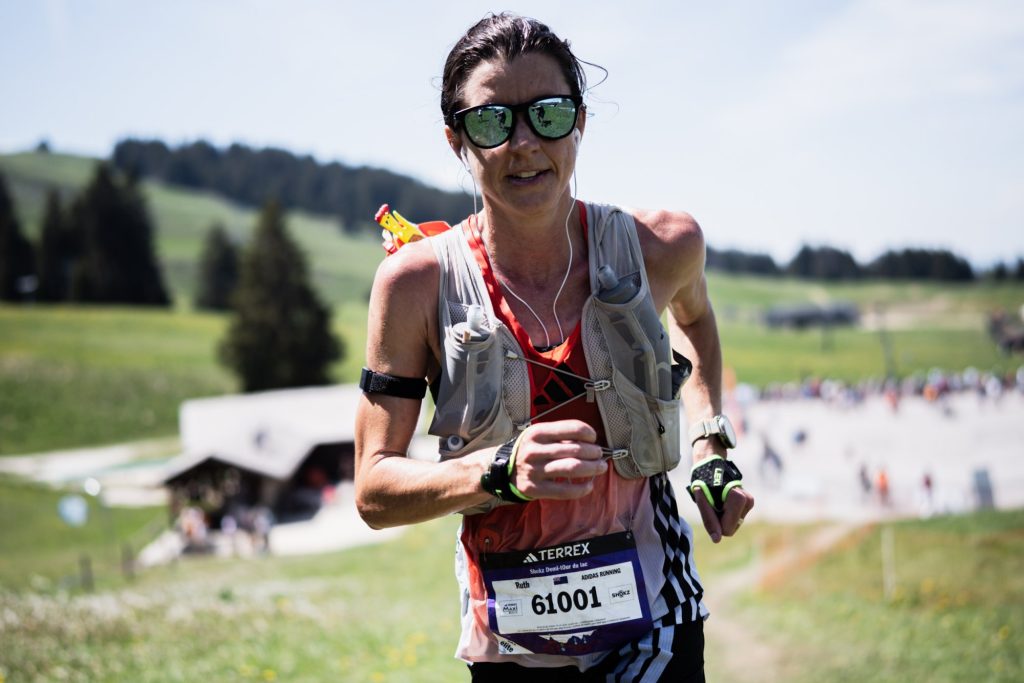
Quelle Bilder: ©Amazfit und Ruth Croft